




Key Takeaways
- A strategy is a repeatable plan, not a random setup.
- Start with fit: pick a market + timeframe you can execute consistently.
- Build your edge by tracking one static level (does price react or not?).
- Turn the level into a playbook by adding simple context filters.
- Keep it measurable: one playbook + one entry trigger.
- Trade the mindset: wait for proof, then react. Don’t predict.
Building a trading strategy from scratch can feel overwhelming, but it doesn’t have to be. If you’ve ever asked how to build a trading strategy that’s based on data instead of guesswork, you’re in the right place.
Here, Severin teaches us how static levels, playbooks, and backtested statistics can form the foundation of a strategy that fits our lifestyle and delivers consistent performance.
What Is a Trading Strategy?
A trading strategy is basically our game plan. It’s the set of rules that keeps us from showing up to the charts and improvising.
At a minimum, it answers four questions:
- What we trade (the specific market we focus on, like NASDAQ futures or crypto)
- When we trade (the timeframe we operate on, plus the exact conditions that must be present)
- Where we act (the key levels we care about, and the context that confirms a high-probability setup)
- How we execute (one consistent entry trigger we use every time, so results stay measurable)
If any of these are fuzzy, our trading gets fuzzy too. And when the rules aren’t clear, we start making decisions based on emotion, recent wins/losses, or whatever the market is doing in the moment. All of this makes our results inconsistent.
Before we worry about entries, we need to decide what “showing up consistently” even looks like for us. That starts with choosing a market and a timeframe we can realistically trade.
Watch the full lesson on how to build a trading strategy here.
How To Build a Trading Strategy: Step by Step
- Pick a Market You Can Trade
Before we build any rules, we choose a market and a timeframe we can consistently show up for. A strategy only works if we can execute it in real life, not just in theory.
Ask yourself:
– How much focused time do we really have each day?
– Do we want 1–2 decisions per day, or many fast decisions?
– Can we be present during the main session we want to trade?
– Are we patient (swing) or reactive (scalp)?
– Do we want to master one asset deeply, or follow many assets without depth?
Quick reference: swing traders usually operate on Daily–4H, while scalp traders usually trade 30m–1m. The goal isn’t to pick what sounds exciting; it’s to pick what we can execute consistently.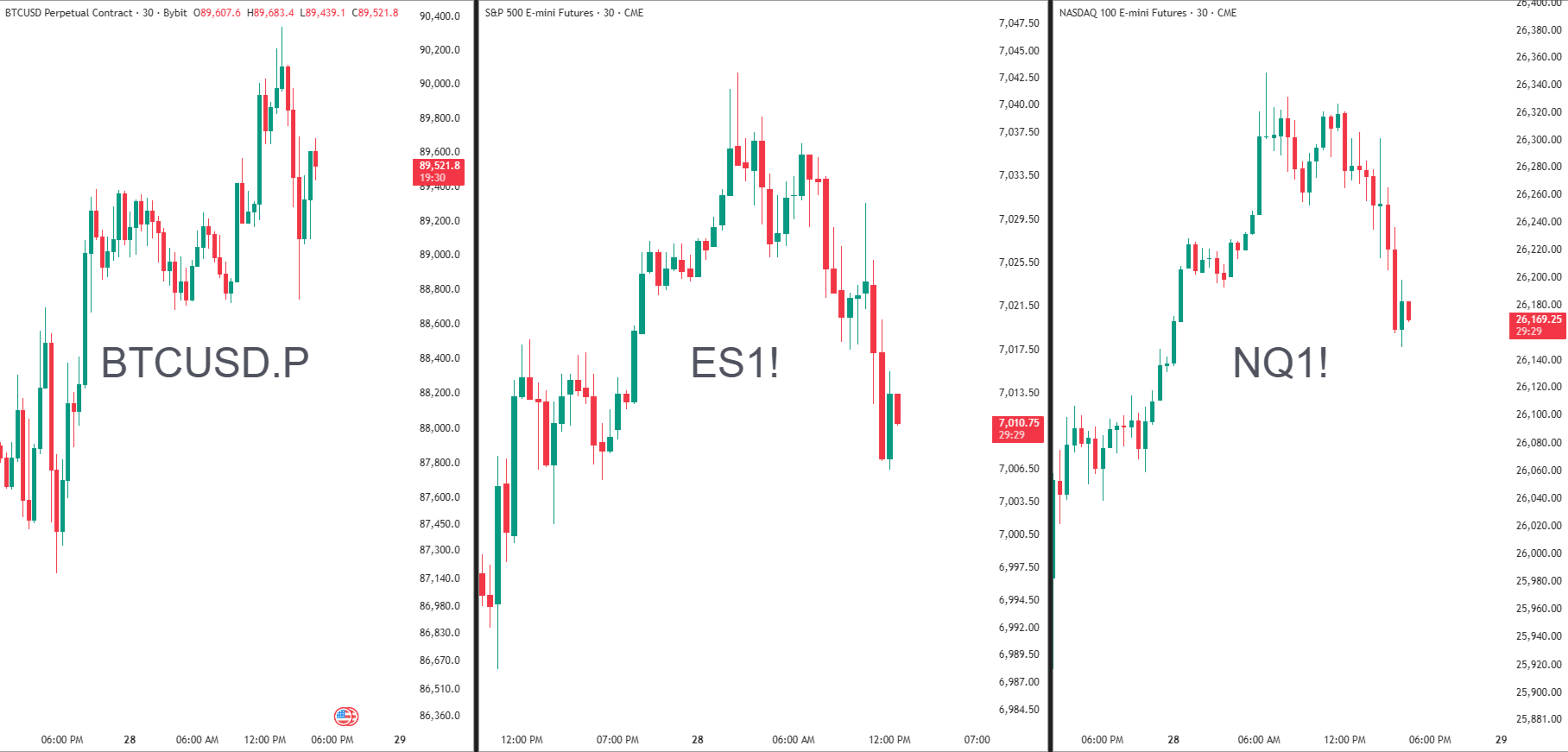
- Prove an Edge With One Static Level
Now we need something simple and measurable to build our edge around. That’s why we start with one static level (a level that’s “fixed” and easy to track consistently).
Pick one level (for example: Daily Open, Previous day Value Area High, Previous Day Value Area Low, Previous Day Point of Control, etc.), mark it on your chart, and focus on one question:
When price reaches this level, does it usually react, or not?
Don’t overcomplicate it. We’re not building a full strategy yet. We’re just collecting clean data on one level, so we can later decide whether it’s worth turning into a playbook.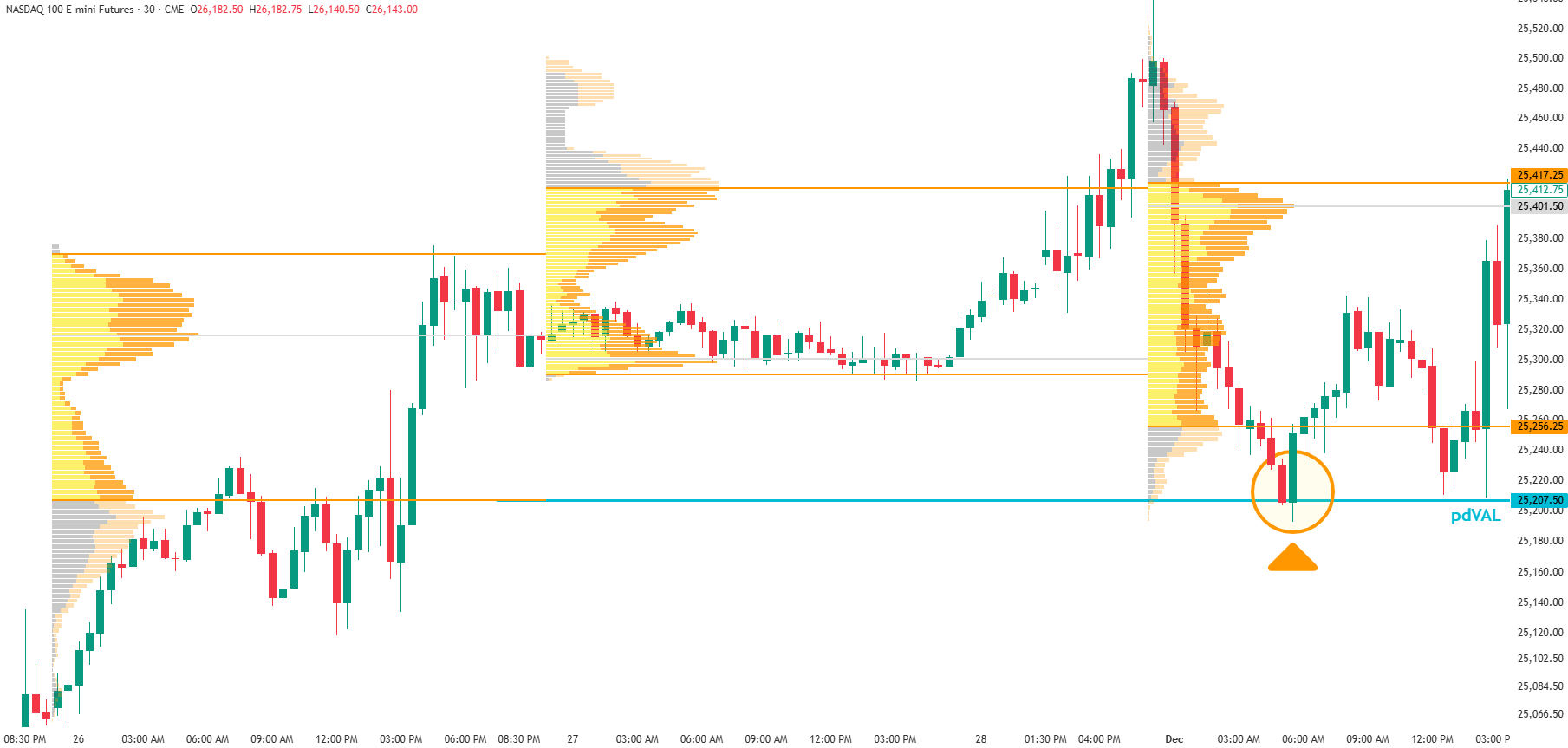
- Add Context and Turn It Into a Playbook
A static level is just a spot on the chart. A playbook is the rule for when we’re allowed to trade that spot.
So once we have a level we’re tracking, we add a few simple “green lights” that must be present before we take the trade. This keeps us from trading every touch and helps us focus on the higher-quality ones.
Think of it like this: same level + same confirmations = a repeatable setup.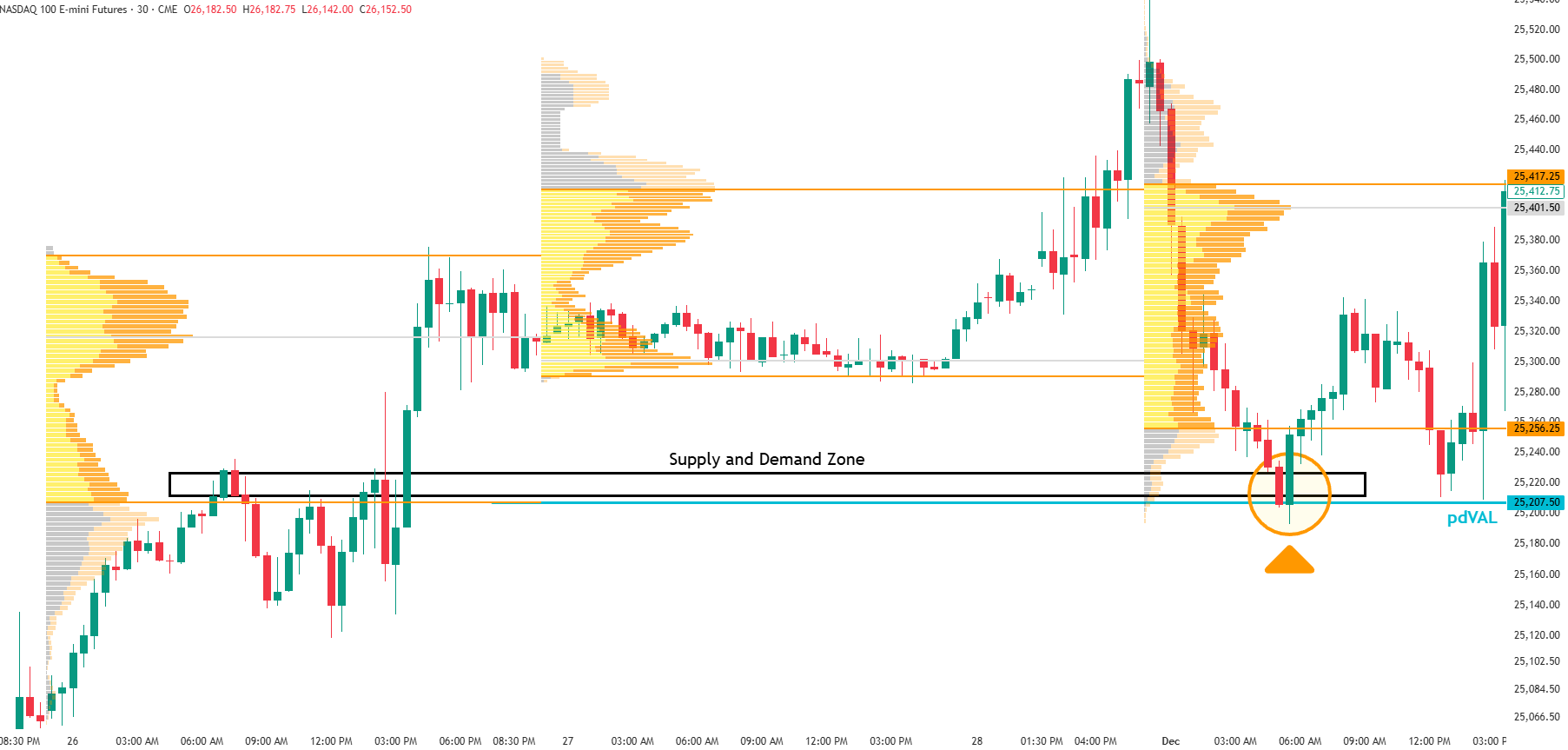
- Pick One Entry Trigger and Stick to It
An entry trigger (or entry model) is the exact rule that tells us when to enter once our playbook is active. It’s our “go” signal.
We keep it clean: one playbook + one entry trigger. If we switch entries all the time, results get messy, and we can’t measure what’s working.
Example: if we use market structure as our trigger, once the price reaches our zone of interest, we drop to the 1-minute chart and wait for the structure to flip; that break is our entry.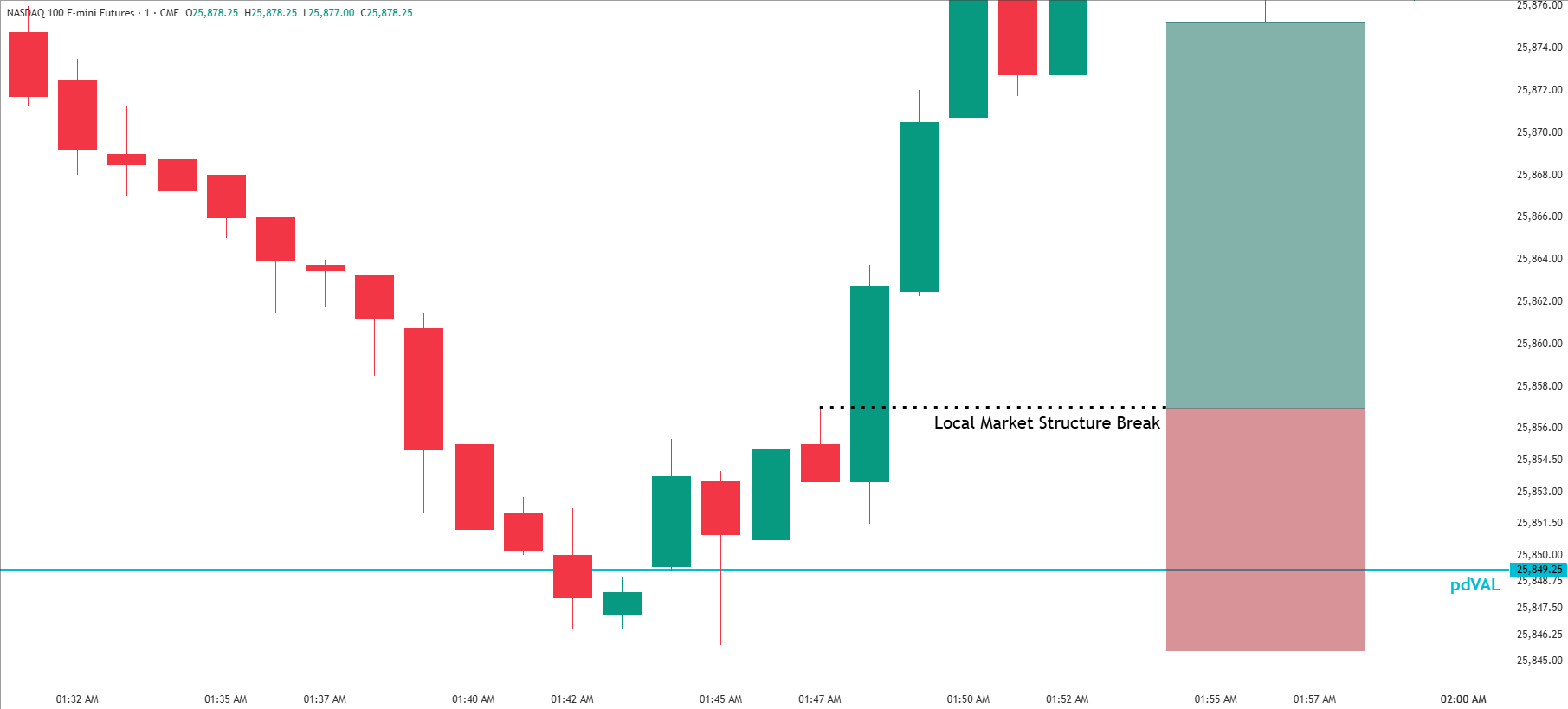
How to Backtest a Trading Strategy
If we want a strategy we can trust, we need clean data. That means we only track situations that test our idea, and we track enough of them to avoid getting fooled by a short streak.
- Only record real tests. If the price doesn’t touch the level, it’s not a test, so we don’t log it.
- Use a real sample size. We aim for about 200 valid touches before we consider anything “proven.”
- Use a cutoff rule. If the win rate comes in below 60%, we drop the level and move on. We don’t force it; we focus on what’s working.
What Is a Static Level?
A static level is a fixed price reference that doesn’t move during the session. Because it stays in the same place, it’s easy to mark, track, and perfect for building reliable statistics.
In Chart Champions, we commonly use static levels like:
- Daily/Weekly/Monthly opens
- Previous day/week/month open
- Previous day/week/month value areas
- Previous day/week/month point of controls
- Previous day/week/month highs and lows
- Overnight sessions highs and lows
- RTH Sessions highs and lows
These levels are repeatable reference points for testing reactions.
How to Define Win and Loss Criteria in Trading
Before we track anything, we define what a win and a loss mean; otherwise, our stats become subjective and change depending on how we feel.
Inside Chart Champions, we mainly use two methods:
- Candle-close method: the outcome depends on where candles close relative to the level.
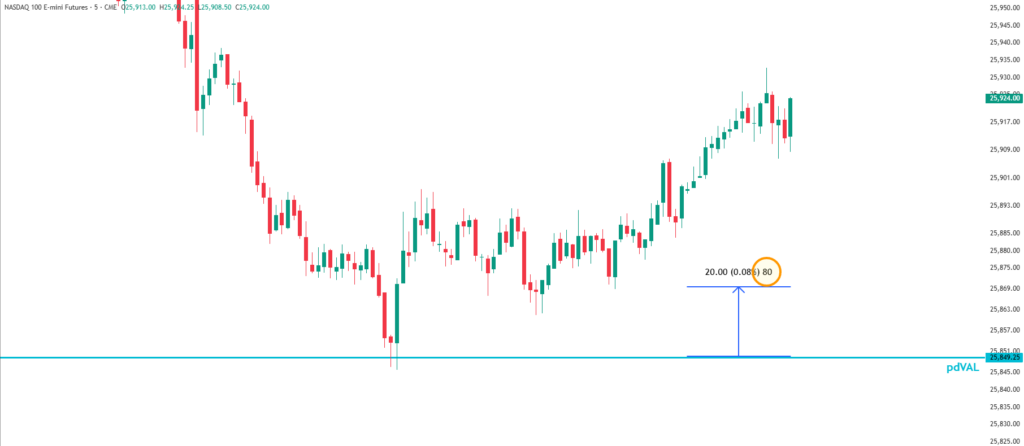
- Tick-based method: outcome is based on a predefined number of ticks moving away from (or through) the level.
Severin prefers a tick-based rule to label a trade as a winner. In this NASDAQ example, we need at least an 80-tick reaction to count the trade as a win.
Build Your Playbook With Chart Champions
If you want to take this further, Chart Champions is where we turn these concepts into real execution. Inside the platform, you’ll find dedicated lessons on entry triggers taught by Daniel, Igor, and Severin, so you can choose a model that fits your style and standardise it.
And if you want a powerful, structured entry model to plug into your playbook, we recently released Severin’s 3 Candle Entry Strategy, available to both Contender and Champion members.
Ready to build your playbooks with us and trade with clarity? Join Chart Champions and start executing a strategy you can measure and improve.
Download the Trading Strategy Cheat Sheet
Download our Trading Strategy Cheat Sheet to get a step-by-step guide for building your own strategy.
Other Trading Cheat Sheets available to download:
Trading Strategy FAQs
Pick a market and timeframe you can realistically trade every day. If you can’t execute it consistently, the strategy won’t hold up.
Track it. Focus on whether the price usually reacts when it touches the level. If the stats don’t support it, it’s not worth building into a setup.
Aim for about 200 valid touches before considering anything “proven.”
Use a clear rule upfront; either the candle-close method (based on where candles close) or a tick-based method (based on a predefined tick reaction).
A playbook is a rule-based setup: a level plus context (the “green lights”) that tells us when we’re allowed to trade that level.
It’s the exact rule that tells us when to enter once the playbook is active.